
Why Temperature Control Matters When Restacking Pallets
A few minutes on a warm dock can compromise temperature-sensitive freight. Here is why controlled restacking matters and how to protect your cold chain.
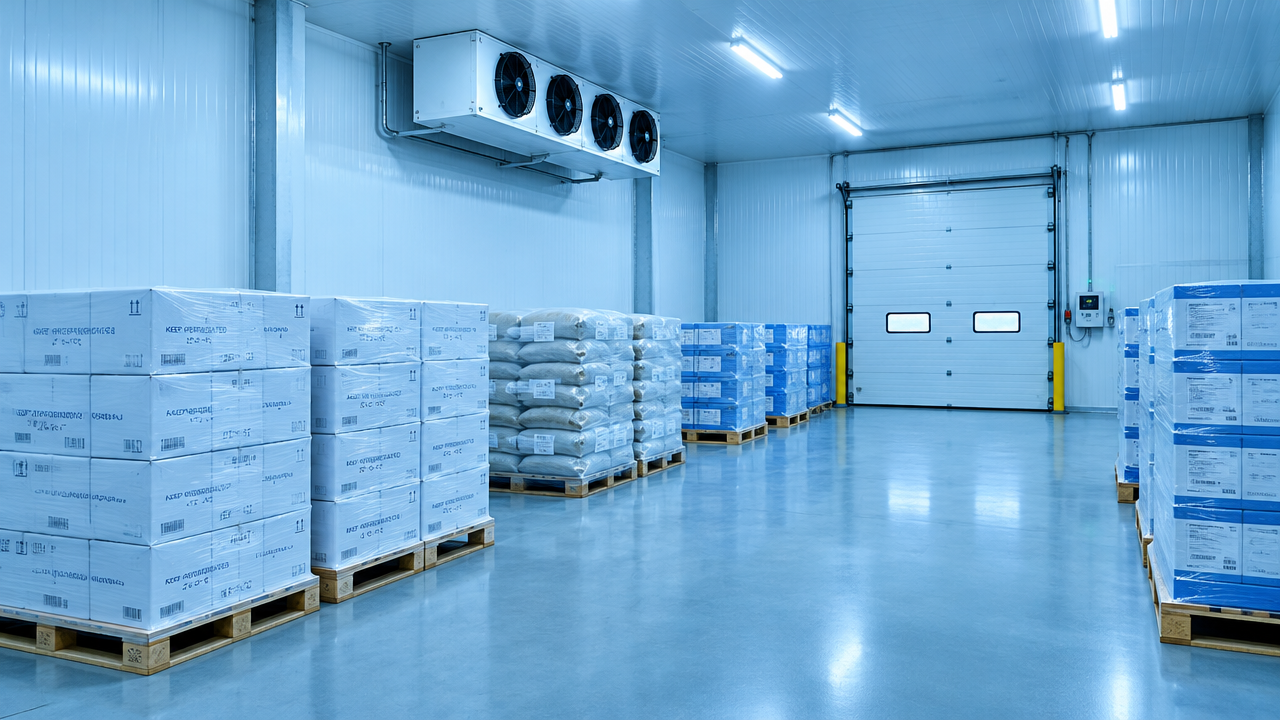
When a refrigerated trailer arrives with a damaged or non-compliant pallet, the obvious move is to restack it. But where you restack it matters as much as whether you restack it. The few minutes a pallet spends on a warm dock during conventional restacking can be enough to affect product quality, trigger a temperature excursion, or shorten shelf life. For temperature-sensitive freight, that hidden exposure is a real risk.
The problem is what we call the dock-door warm-up. A refrigerated trailer holds freight at a controlled temperature, but the moment a pallet is unloaded onto an ambient-temperature dock, it begins to warm. The rate depends on the product, the ambient temperature, and how long it sits, but the effect is real and cumulative. For food and beverage, produce-adjacent goods, confections, supplements, cosmetics, and adhesives, even a short exposure can matter. A pallet that was fine in the trailer can arrive at its destination with a compromised temperature history.
The solution is restacking inside a temperature-controlled environment. Instead of unloading onto a warm dock, freight is moved into a controlled space where the temperature is maintained throughout handling. The restack, rewrap, and relabel all happen within that environment, so the cold chain is never broken. The handling is short and monitored, and the freight goes back onto the reefer without ever leaving the temperature range it requires.
This is a capability that most local cross-docks simply do not offer. A standard cross-dock is a dry, ambient facility. It can restack freight, but it cannot do so without breaking the temperature environment. That means shippers of temperature-sensitive freight either have to accept the dock-door warm-up risk or find a facility that can handle it properly. LGX Dock is one of the few Central Florida cross-docks that can offer temperature-controlled restacking, which means your reefer freight can be reworked without compromise.
If you ship temperature-sensitive freight through Central Florida, ask your cross-dock whether they can restack inside a controlled environment. If they cannot, every rework is a temperature risk. And if you want that risk eliminated, bring your reefer to a facility that can handle it the right way. Your product integrity, your shelf life, and your compliance may depend on it.